
 Save to Pinterest
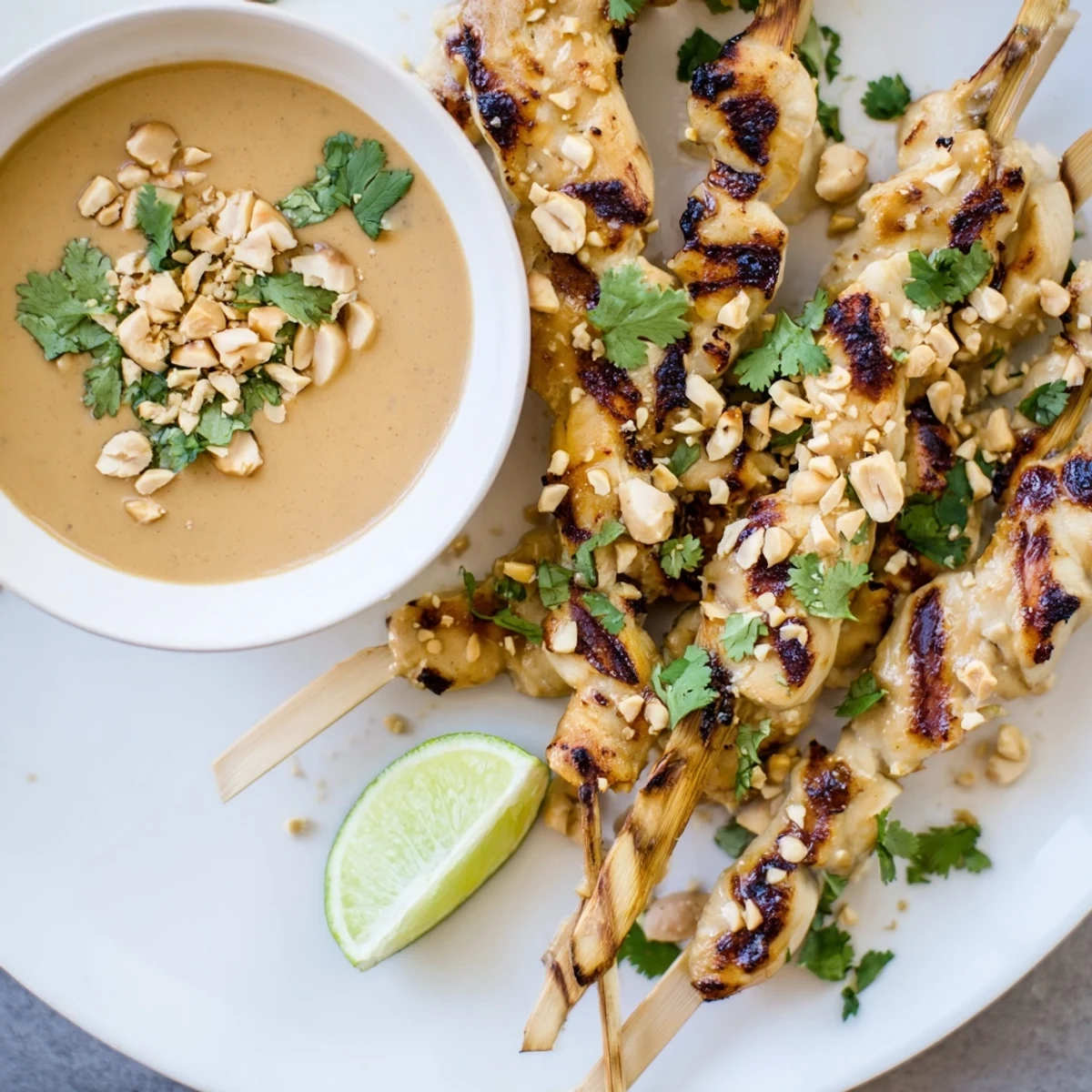
 This Southeast Asian-inspired dish features tender chicken marinated with aromatic spices and grilled on bamboo skewers for smoky flavor. The creamy peanut sauce combines coconut milk, peanut butter, and tangy highlights of lime and chili, adding depth and richness. Perfectly garnished with fresh cilantro, lime wedges, and crushed peanuts, this dish balances savory, spicy, and nutty notes. Ideal for appetizers or main courses, it pairs beautifully with jasmine rice or a fresh cucumber salad.
The first time I tasted chicken satay was at a small night market in Bangkok, where the vendor worked his grill with the kind of practiced ease that comes from years of repetition. Smoke curled around charred skewers, and the smell—ginger, garlic, caramelized sugar—drew me in before I even saw the food. I've chased that memory ever since, and this recipe finally captured it in my own kitchen.
I made these for a small dinner party last summer when my neighbor brought over fresh limes from her garden, and I suddenly realized I had all the pieces for something special. Watching everyone's faces light up when they tasted that char on the chicken and then dipped it into the peanut sauce—that was the moment I knew this recipe belonged in regular rotation.
Ingredients
- Boneless, skinless chicken thighs or breasts (500 g): Thighs stay juicier on the grill, but either works; cut them into strips that cook quickly and absorb the marinade evenly.
- Soy sauce or tamari (2 tablespoons): This carries the savory backbone of the dish; use tamari if you need gluten-free.
- Fish sauce (1 tablespoon for chicken, 1 teaspoon for sauce): Trust this ingredient—it disappears into the background but makes everything taste more alive.
- Brown sugar (1 tablespoon for marinade, 1 for sauce): A light touch of sweetness balances the salty and spicy notes perfectly.
- Fresh garlic and ginger (2 cloves and 1 tablespoon grated): Mince the garlic finely so it distributes through the marinade; ginger should be freshly grated, not from a jar.
- Ground coriander and cumin (1 teaspoon each): These spices are what makes satay taste like itself—toasty, warm, unmistakably Southeast Asian.
- Vegetable oil (1 tablespoon): Just enough to help everything coat evenly and prevent sticking on the grill.
- Fresh lime juice (½ lime for marinade, 1 tablespoon for sauce): Acid brightens everything; always use fresh lime, never bottled.
- Bamboo skewers (8–12): Soak them in water for at least 30 minutes so they don't catch fire on the grill.
- Creamy peanut butter (120 g): Use the kind with just peanuts and salt, nothing hydrogenated—the flavor difference is huge.
- Coconut milk (120 ml): Full-fat is better; it creates that velvety sauce that makes people pause mid-bite.
- Chili garlic sauce or Sriracha (1 teaspoon): This adds heat and depth; adjust to your comfort level.
- Cilantro, lime wedges, and crushed peanuts: These garnishes are not decoration—they're the final flavor flourish that makes the dish sing.
Instructions
- Build the marinade:
- In a bowl, whisk soy sauce, fish sauce, brown sugar, minced garlic, grated ginger, coriander, cumin, oil, and lime juice until the sugar dissolves. The mixture should smell intensely aromatic—if it doesn't, you've found your first moment to taste and adjust.
- Marinate the chicken:
- Add chicken strips to the marinade and toss until every piece is coated, then cover and refrigerate for at least 30 minutes. Longer is better; if you can marinate overnight, the flavor deepens significantly.
- Make the sauce while you wait:
- Heat a small saucepan over low flame and whisk together peanut butter, coconut milk, soy sauce, brown sugar, lime juice, chili sauce, fish sauce, and minced garlic. Stir constantly—you want it smooth and silky, not broken or separated. Thin with warm water a tablespoon at a time until it reaches the consistency of pourable cream, then turn off the heat.
- Thread the skewers:
- Slide marinated chicken pieces onto your soaked skewers, leaving a tiny bit of space between pieces so they cook evenly. This step is almost meditative—take your time with it.
- Get the grill ready:
- Preheat your grill or grill pan to medium-high heat and lightly oil the grates with a folded paper towel dipped in oil. You want them hot enough that a drop of water sizzles immediately on contact.
- Grill with confidence:
- Place skewers on the hot grate and let them sit for 3–4 minutes without moving them—this is how you get that beautiful char. Flip, grill another 3–4 minutes, and you're done. The chicken should be cooked through and caramelized at the edges.
- Finish and serve:
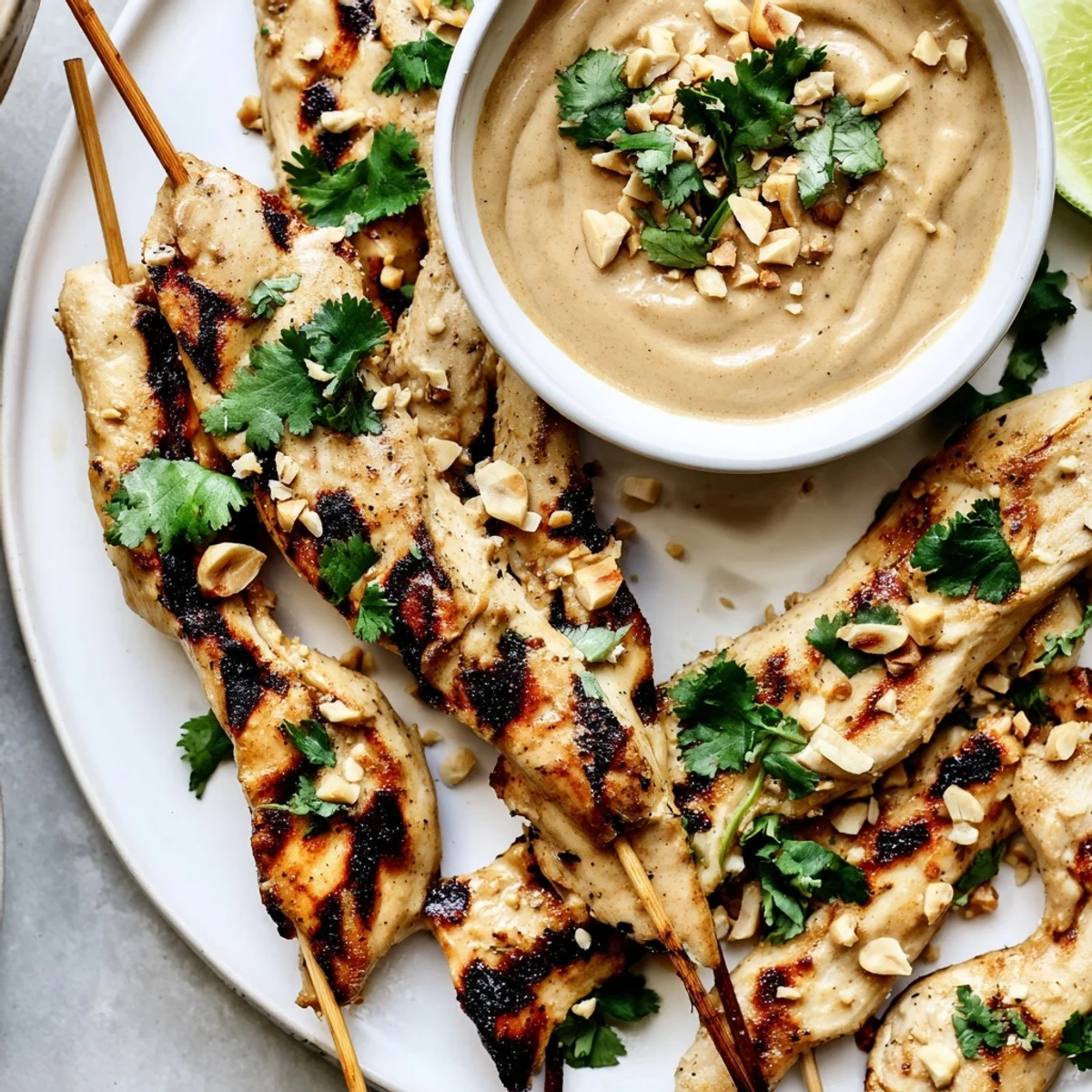
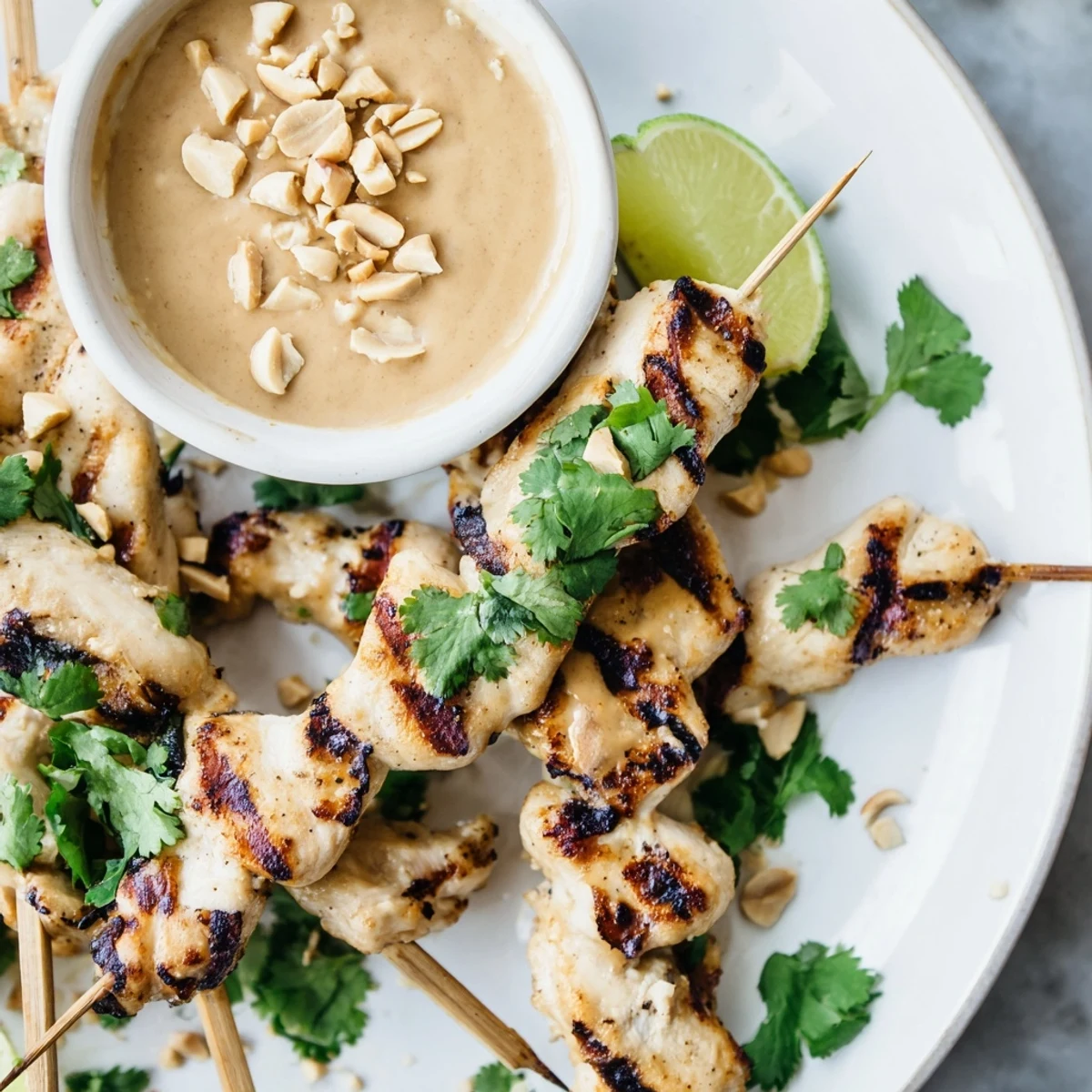
- Transfer skewers to a platter, scatter cilantro and crushed peanuts over top, arrange lime wedges around them, and pour the peanut sauce into a small bowl for dipping. Serve while the skewers still have some warmth.
 Save to Pinterest
 What stuck with me wasn't just the taste but the moment—the smell of the grill carrying across the patio, the clink of glasses, the way someone looked up from their plate and said this tastes like vacation. That's what good food does when it's made with intention.
The Magic of the Marinade
The 30-minute soak is when the real alchemy happens. The soy sauce and fish sauce penetrate the chicken, the spices unlock their warm notes, and the lime juice adds brightness that keeps the dish from feeling heavy. I've found that even 15 minutes in a hot kitchen does something, but patience rewards you here. If you can marinate overnight, the flavors deepen into something almost unrecognizable from raw chicken—they transform into something that tastes like it's been cooked low and slow, even though it only hits the grill for minutes.
Making the Sauce Without Fear
The peanut sauce intimidates people, but it shouldn't. It's just whisking five ingredients together over gentle heat until they become friends. The key is low heat—you're not trying to cook anything, just marry flavors and warm it through. Coconut milk and peanut butter can separate if the heat climbs too high, so keep it at a simmer and stir constantly. If your sauce breaks (it won't, but if it does), a little warm water whisked in slowly brings it back together.
Grilling and the Char That Matters
Medium-high heat is the sweet spot—hot enough to create that caramelized char, but not so violent that the outside burns before the inside cooks. The moment your skewers hit the grill, the maillard reaction starts, creating those dark, delicious edges that make everything taste deeper. Don't flip too early, and don't crowd the grill; give each skewer room to breathe. The chicken is done when it's opaque all the way through and the exterior has spots of golden-brown char.
- If your grill temperature is too low, you'll end up with steamed, pale chicken instead of caramelized satay.
- A grill pan indoors works just as well as an outdoor grill, though outdoor smoke adds a layer of flavor you can't replicate inside.
- Leftover skewers (if there are any) are incredible cold the next day, dipped in sauce straight from the fridge.
 Save to Pinterest
 These skewers have become my go-to when I want to feel like I'm cooking something ambitious without any of the actual stress. Make them for someone who matters.
Recipe FAQs
- → How long should the chicken be marinated?
-
Marinate the chicken strips for at least 30 minutes to allow flavors to penetrate, but for best results, marinate overnight in the refrigerator.
- → Can I use other proteins instead of chicken?
-
Yes, tofu or shrimp are great alternatives that soak up the marinade well and cook quickly on the grill.
- → How do I ensure the chicken stays moist while grilling?
-
Use boneless, skinless thighs or breasts and avoid overcooking by grilling 3-4 minutes per side on medium-high heat.
- → What can I substitute for peanut butter if allergic?
-
Sunflower seed butter works as a nut-free substitute for the peanut sauce, maintaining creaminess and flavor.
- → How can I adjust the peanut sauce consistency?
-
Add warm water gradually while whisking to reach a smooth and pourable consistency that coats the skewers nicely.
- → What garnishes complement this dish best?
-
Fresh cilantro, lime wedges, and crushed roasted peanuts enhance texture and add bursts of freshness and crunch.