
 Save to Pinterest
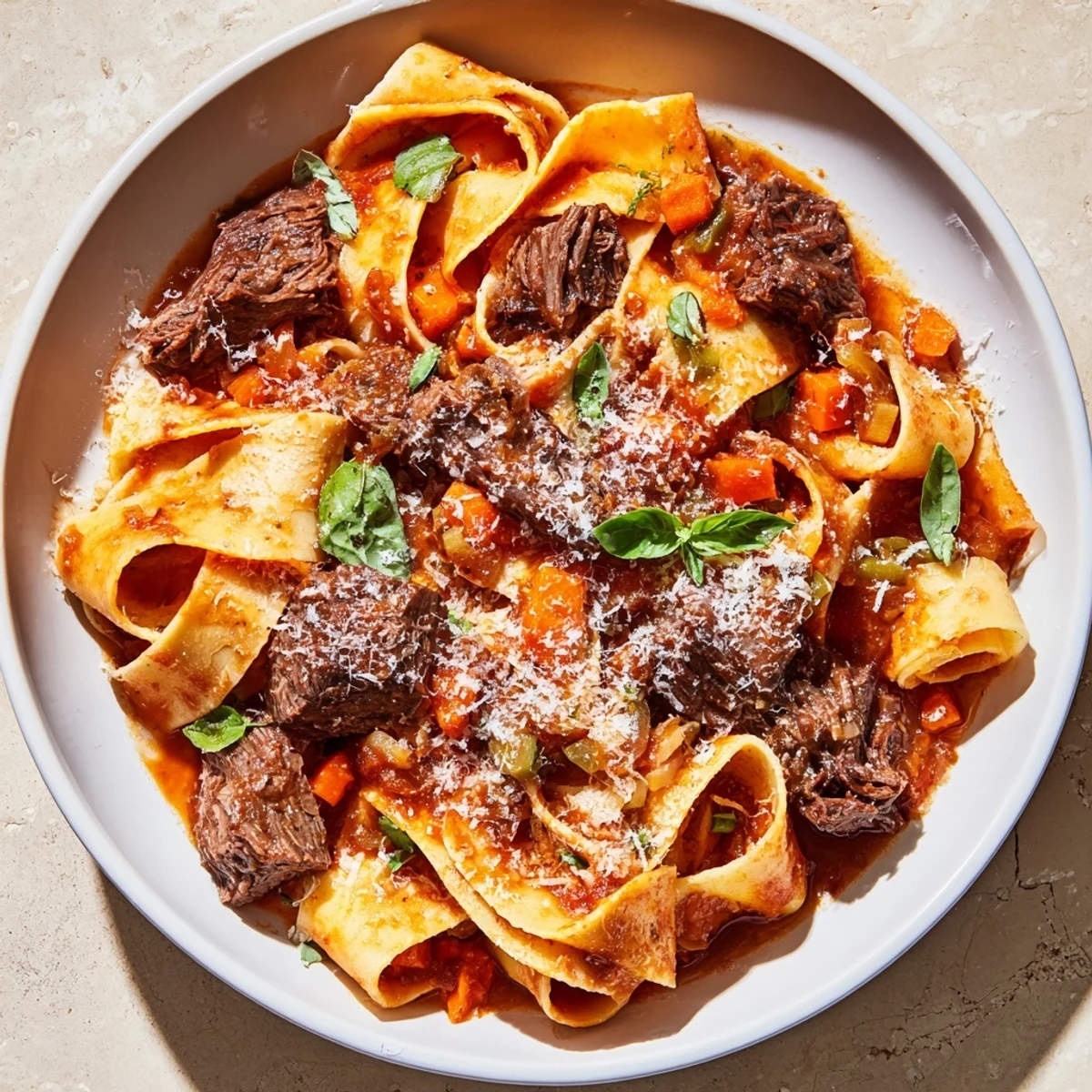
 This Italian-inspired beef ragu is slowly simmered until tender, blending savory beef, aromatic vegetables, and rich tomato sauce. Paired with broad pappardelle pasta, it creates a warm, hearty meal perfect for comforting evenings. The sauce is enhanced by herbs, red wine, and a hint of milk for creaminess. Simmering in a slow cooker allows flavors to meld beautifully, while the pasta offers a satisfying base to soak up the robust sauce. Garnish with Parmesan and fresh herbs for finishing touches.
I stumbled on this recipe during a winter when I was craving something deeply comforting but didn't want to babysit a stove all day. The slow cooker sat gathering dust in my cupboard, and I figured if Italian nonnas could simmer ragu for hours, maybe a slow cooker could do the heavy lifting. The smell that filled my kitchen that first evening—rich tomato, wine, and tender beef—made me a believer.
The first time I made this for friends, I plated it nervously, worried the slow cooker method might seem like cheating. But when they twirled their forks and went quiet, I knew I'd nailed it. One friend even asked if I'd been hiding an Italian grandmother in my kitchen.
Ingredients
- Beef chuck roast: This cut has enough marbling to stay juicy through long cooking, and it shreds beautifully without drying out.
- Olive oil: Use it to sear the beef properly, which locks in flavor and creates those caramelized bits that deepen the sauce.
- Yellow onion: Finely chop it so it melts into the sauce, adding sweetness that balances the acidity of the tomatoes.
- Carrots and celery: These form the classic soffritto base, lending subtle earthiness and a hint of natural sweetness.
- Garlic: Fresh cloves are essential here, minced finely so they infuse every corner of the ragu.
- Tomato paste: Cooking it for a minute in the skillet removes any tinny taste and concentrates its rich, savory depth.
- Crushed tomatoes: I prefer canned San Marzano if you can find them, their smooth texture and low acidity make all the difference.
- Dry red wine: Don't use anything you wouldn't drink, the flavor really comes through after hours of simmering.
- Dried oregano and basil: These hold up well in slow cooking and bring that unmistakable Italian warmth.
- Bay leaves: They add a subtle herbal note, just remember to fish them out before serving.
- Crushed red pepper flakes: Optional, but a pinch adds a gentle heat that wakes up the whole dish.
- Sugar: A small amount cuts through tomato acidity and rounds out the flavor.
- Whole milk: Stirred in at the end, it softens the sauce and gives it a silky, luxurious finish.
- Pappardelle pasta: Wide ribbons are traditional and they catch the chunky ragu perfectly.
- Parmesan cheese: Freshly grated is non-negotiable, the pre-shredded stuff just doesn't melt or taste the same.
- Fresh basil or parsley: A bright, herbaceous finish that contrasts beautifully with the rich sauce.
Instructions
- Season the beef:
- Pat the chunks dry with paper towels first, then sprinkle salt and pepper generously on all sides. Dry meat sears better and develops that deep, caramelized crust.
- Sear the beef:
- Heat the olive oil until it shimmers, then add the beef without crowding the pan. Let each side brown undisturbed for 2 to 3 minutes, the crust adds serious flavor to the final sauce.
- Sauté the vegetables:
- Use the same skillet with all those browned bits still clinging to the bottom. Cook the onion, carrots, and celery until they soften and turn golden, then add the garlic and tomato paste, stirring constantly so nothing burns.
- Build the sauce:
- Scrape everything into the slow cooker with the beef, then pour in the crushed tomatoes, wine, herbs, and sugar. Stir gently to coat the beef evenly.
- Slow cook:
- Cover and set it to low, then walk away for 8 hours. The beef will become so tender it practically dissolves into the sauce.
- Shred and finish:
- Fish out the bay leaves, then use two forks to pull the beef apart right in the cooker. Stir in the milk and taste, adding more salt or pepper if needed.
- Cook the pasta:
- Boil the pappardelle in well-salted water until al dente, then drain it quickly. Don't rinse, you want that starchy coating to help the sauce cling.
- Serve:
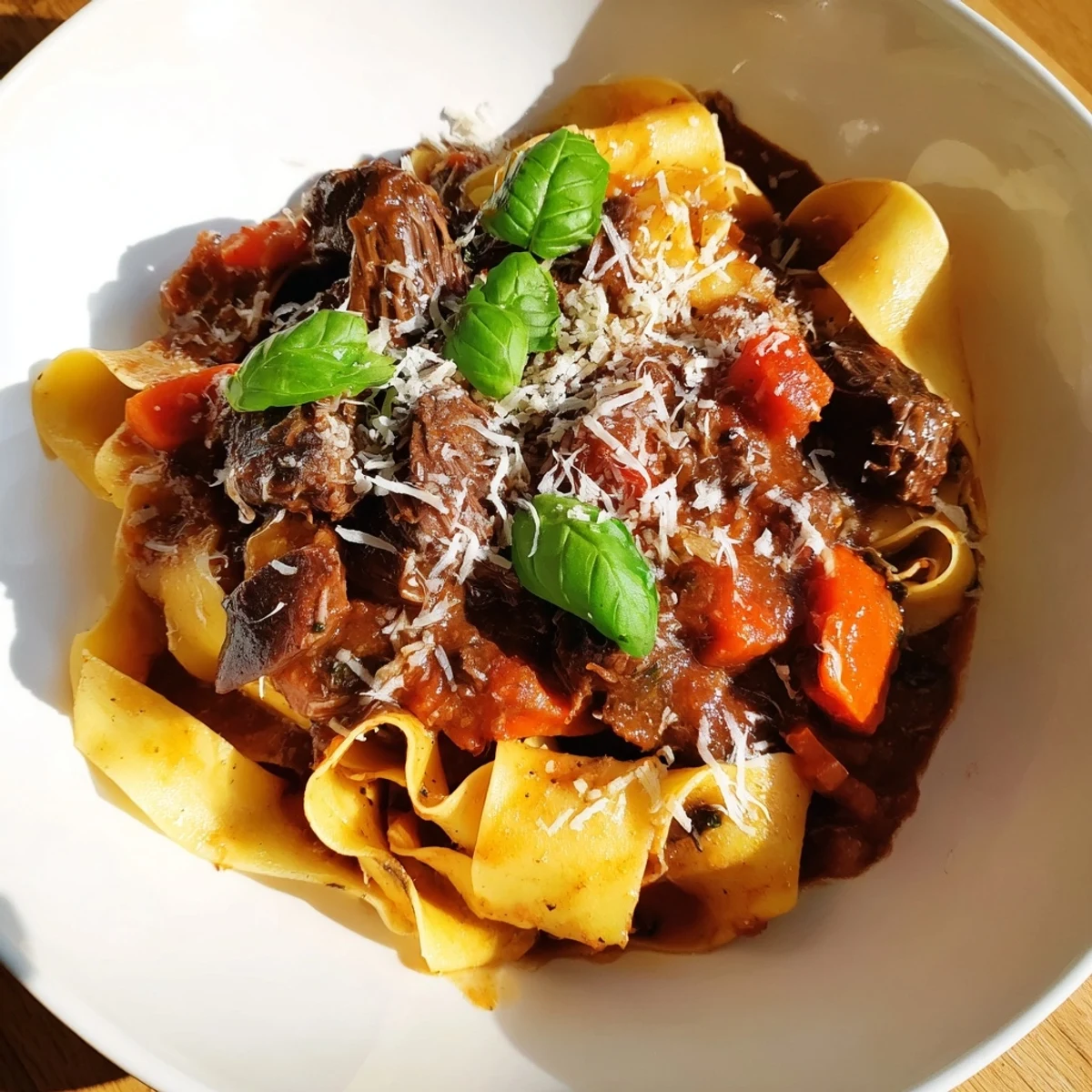
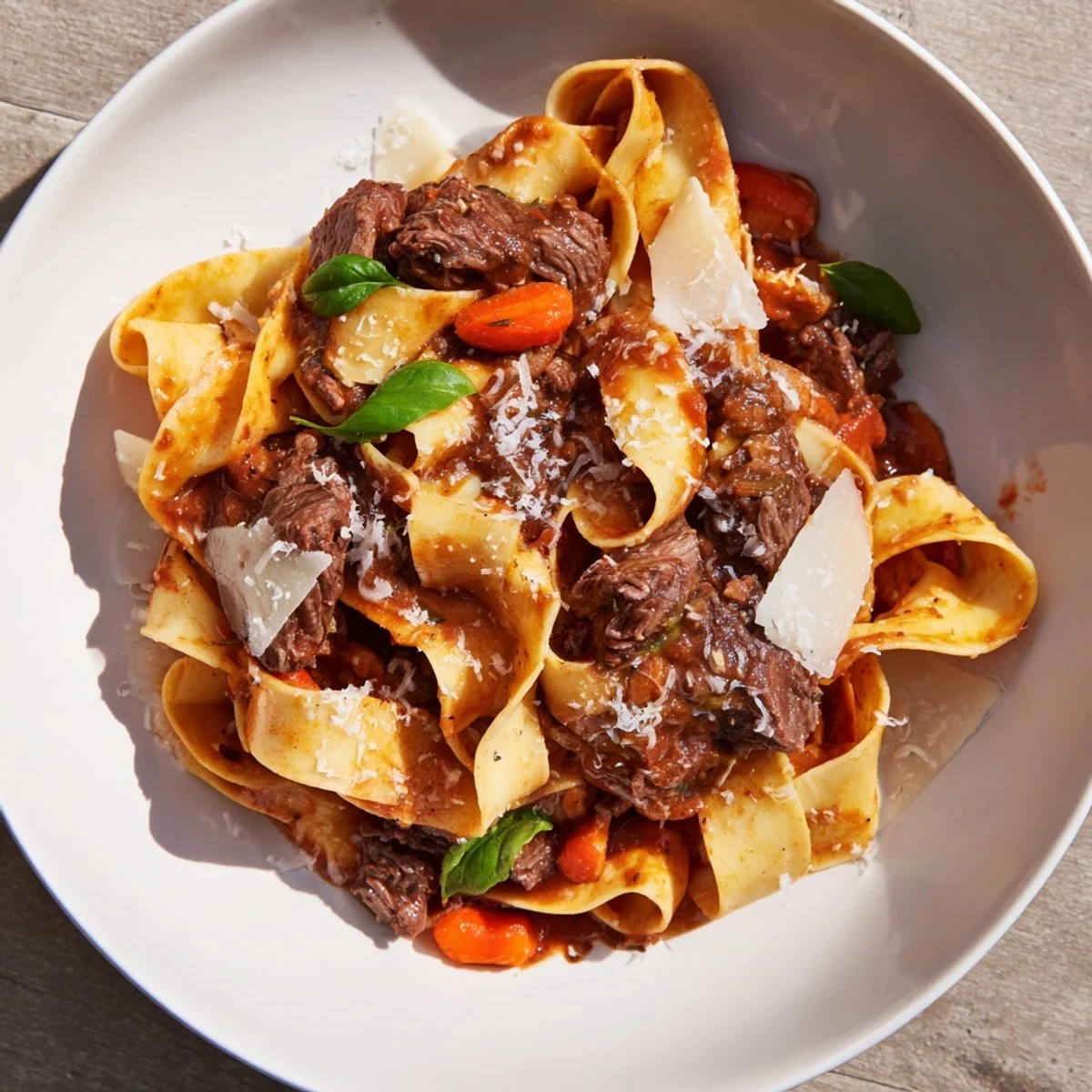
- Twirl the pasta onto plates, spoon the ragu generously over top, then shower with Parmesan and fresh herbs. Serve it hot and watch it disappear.
 Save to Pinterest
 One rainy Sunday, I made a double batch and froze half in portions. Weeks later, when I was too tired to think about dinner, I thawed one and tossed it with fresh pasta. It tasted like a warm hug from my past self, and I realized this recipe had become my secret weapon for hard days.
Making It Ahead
This ragu actually improves after a night in the fridge, the flavors meld and deepen in a way that's hard to describe. I often make it a day early, then reheat it gently on the stove while the pasta cooks. If you're freezing it, let it cool completely, then portion it into airtight containers and freeze for up to three months.
Wine Pairing and Substitutions
I usually reach for a medium-bodied red like Chianti or Sangiovese, something with enough body to stand up to the beef but not so heavy it overpowers the tomatoes. If you'd rather skip the wine, substitute with beef broth and a splash of balsamic vinegar for acidity. The result won't be identical, but it'll still be deeply satisfying.
Serving Suggestions
While pappardelle is my go-to, this ragu is forgiving and works beautifully over polenta, mashed potatoes, or even crusty bread if you're keeping it casual. A simple arugula salad with lemon and olive oil on the side cuts through the richness perfectly.
- Serve with extra Parmesan at the table, people always want more than you think.
- A drizzle of good olive oil over the finished plate adds a luxurious sheen and extra flavor.
- Leftovers make an incredible filling for lasagna or baked pasta the next day.
 Save to Pinterest
 This recipe taught me that patience doesn't always mean standing over a pot. Sometimes it means trusting the process, letting time do the work, and coming home to something that tastes like you've been cooking all day.
Recipe FAQs
- → What cut of beef works best for this dish?
-
Beef chuck roast is ideal due to its marbling and tenderness after slow cooking.
- → Can I substitute pappardelle with another pasta?
-
Yes, wide ribbons like tagliatelle or fettuccine work well to hold the rich sauce.
- → How long should I cook the beef for optimal tenderness?
-
Cooking on low for 8 hours or high for 4-5 hours ensures the beef becomes tender and shreddable.
- → Is red wine necessary in the sauce?
-
Red wine adds depth and richness, but can be omitted or replaced with broth if preferred.
- → What is the purpose of adding milk to the sauce?
-
Milk softens acidity and enriches the sauce, contributing to a smooth texture.