
 Save to Pinterest
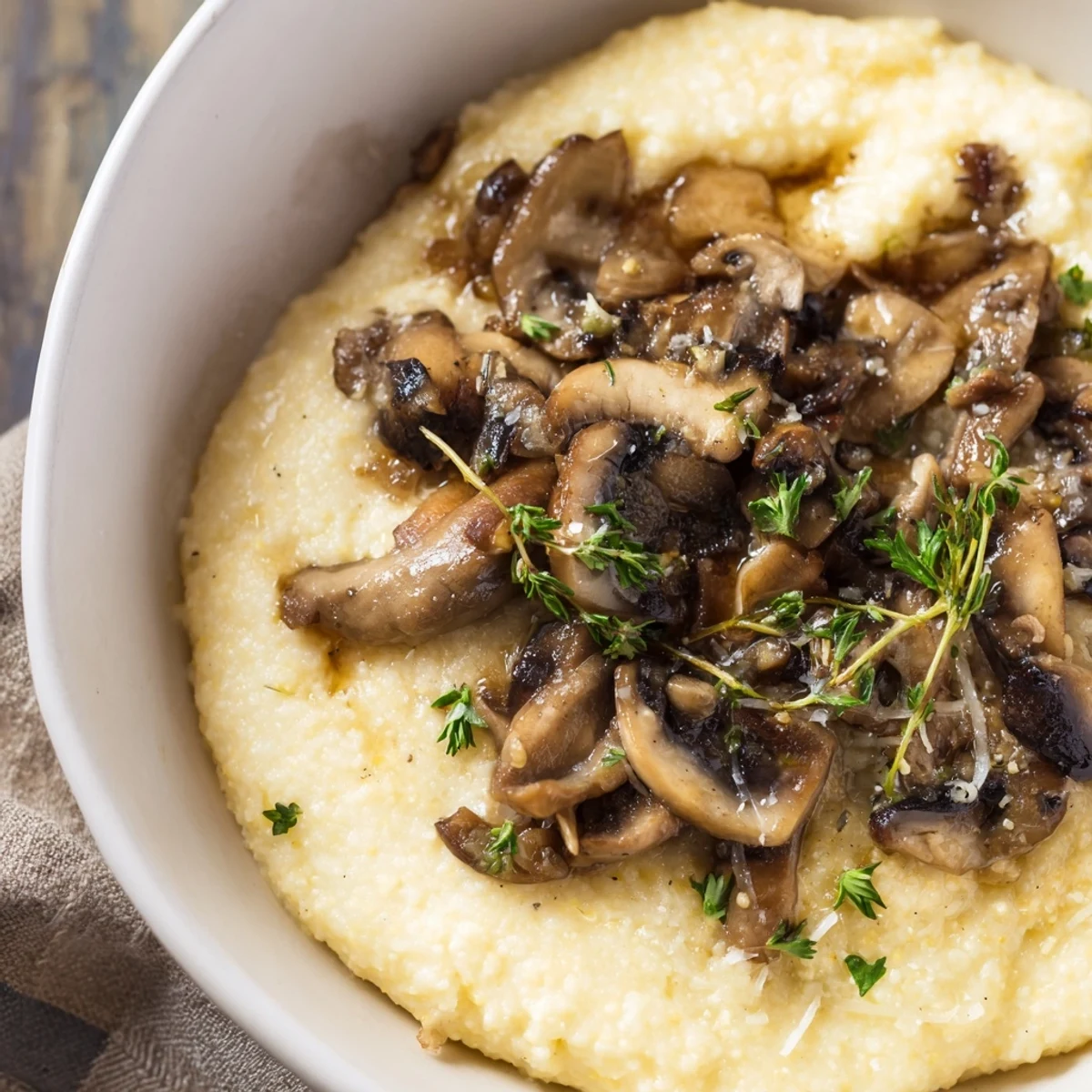
 This dish highlights creamy polenta cooked slowly until smooth and tender, infused with butter and Parmesan for richness. A topping of sautéed wild mushrooms, shallots, garlic, and fresh thyme adds earthy depth and aroma. A splash of white wine enhances the savory flavors, finished with chopped parsley for brightness. Perfect for any season, it offers a rustic, satisfying experience suitable for vegetarian and gluten-free diets.
There's something almost meditative about the way polenta transforms from grainy powder to silky velvet, and I discovered this the hard way one February evening when I decided to finally make it from scratch instead of buying the instant version. The kitchen filled with that warm, toasty cornmeal smell, and by the time I stirred in butter and cheese, I understood why it's been feeding people for centuries. That night, topped with mushrooms I'd found at the farmer's market, it became the kind of dish I kept thinking about for weeks afterward.
I made this for my sister on a quiet Sunday when she needed comfort food, and watching her close her eyes after the first bite reminded me that the best meals are the ones you make with care. She came back for seconds and asked for the recipe, which felt like the highest compliment. Now whenever I make it, I think of that afternoon and how something so simple can matter.
Ingredients
- Coarse cornmeal (polenta): The foundation of everything—look for polenta labeled polenta integrale or cornmeal from Italian brands, as they have better flavor and texture than generic cornmeal.
- Water and whole milk: The ratio of liquid matters more than you'd think; the milk adds creaminess without overpowering the corn's delicate sweetness.
- Unsalted butter: Added at the end to create that luxurious, glossy finish that makes people linger over their bowls.
- Parmesan cheese: Finely grated is essential; pre-grated cheese has additives that prevent clumping and won't incorporate as smoothly.
- Mixed wild mushrooms: Cremini, shiitake, and oyster varieties create layers of umami, but honestly any mushrooms you can find will work beautifully.
- Garlic and shallot: The aromatics that make the mushroom topping sing; don't skip the shallot, as it adds a subtle sweetness that garlic alone cannot.
- Dry white wine: This brightens the earthy mushrooms and cuts through the richness of the polenta in the most elegant way.
- Fresh thyme and parsley: These herbs are not optional—they wake up every element on the plate and make the whole dish feel alive.
Instructions
- Warm your liquid base:
- Pour water and milk into a large saucepan and bring to a gentle simmer over medium heat, then add salt. You want it warm but not boiling, which helps the cornmeal incorporate evenly without clumping.
- Whisk in the polenta slowly:
- While whisking constantly, pour the cornmeal into the liquid in a thin stream, as if you're drawing with it rather than dumping. This is the moment that determines success or lumps—patience here pays off.
- Stir frequently and let time do the work:
- Reduce heat to low and stir often with a wooden spoon, about every minute or so, for 25 to 30 minutes until the polenta pulls away slightly from the sides of the pan and tastes creamy rather than grainy. You'll notice the sound of stirring changes as it thickens.
- Finish with richness:
- Remove from heat and stir in butter, Parmesan, and pepper, tasting and adjusting salt as needed. Cover and set aside while you make the mushrooms.
- Build the mushroom topping:
- Heat olive oil and butter in a large skillet over medium-high heat until it shimmers and smells nutty, then add the chopped shallot and cook for about 1 minute until it becomes translucent and smells sweet.
- Add garlic, then mushrooms:
- Stir in minced garlic for 30 seconds until fragrant, then add all the mushroom slices at once and let them sit undisturbed for 2 minutes before stirring occasionally. This helps them brown instead of steam.
- Cook until golden and dry:
- Continue cooking for 6 to 8 minutes, stirring occasionally, until the mushrooms turn golden brown and any liquid they release has evaporated completely—this concentrates their flavor intensely.
- Deglaze with wine and herbs:
- Pour in white wine and sprinkle thyme over everything, then cook for about 2 minutes, scraping the bottom of the skillet gently while the wine reduces and the mushrooms absorb it. Season with salt and pepper to taste, then remove from heat.
- Add freshness at the end:
- Stir in fresh parsley just before serving so it retains its bright color and fresh taste.
- Assemble and serve:
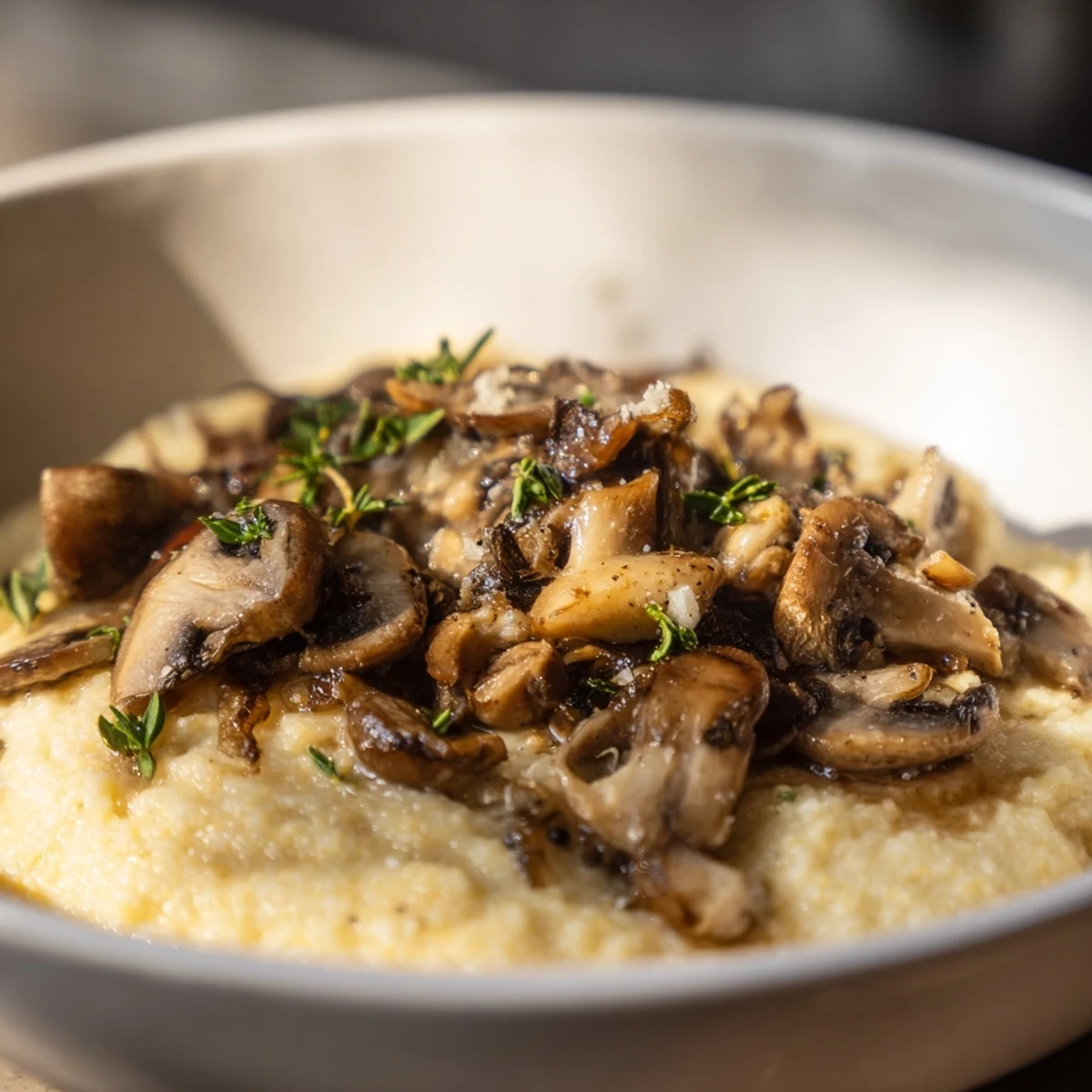
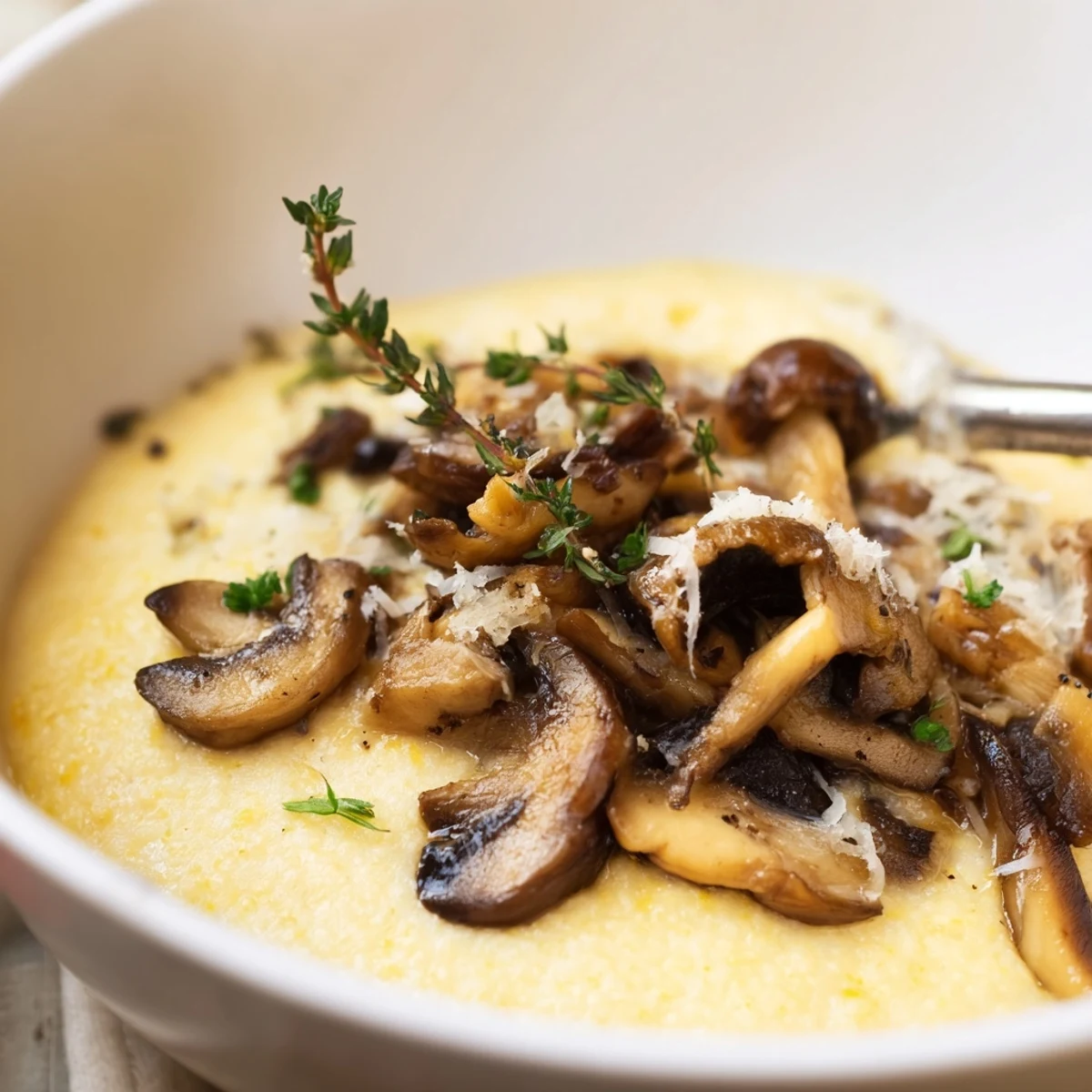
- Spoon warm polenta into shallow bowls, top generously with the mushroom mixture, then garnish with extra thyme and Parmesan if you like.
 Save to Pinterest
 Years ago, a friend told me that polenta used to be peasant food, cooked over fires by people who had almost nothing, and I think about that sometimes when I'm stirring a pot. It's humbling to realize that this simple dish has sustained people, brought families together, and somehow still feels like luxury on a regular Tuesday night.
Choosing and Preparing Mushrooms
The secret to restaurant-quality mushrooms is resistance to the urge to wash them—instead, use a damp paper towel or a soft brush to gently remove soil, as they absorb water like sponges and will turn mushy if soaked. Slice them all to roughly the same thickness so they cook evenly, and don't crowd the pan because they need room to brown rather than steam. If you find only one variety of mushroom at your market, use that with confidence; the technique matters far more than having three perfect types.
Polenta Texture and Timing
The 25 to 30 minute cooking time is not arbitrary—it's when the cornmeal granules fully soften and release their starch, creating that velvety texture that defines polenta done right. Rushing it leaves you with something grainy and disappointing, while cooking it longer than necessary means stirring endlessly with diminishing returns. If your polenta seems too thick near the end, thin it with a splash of warm milk rather than water, which keeps the richness intact.
Wine Pairing and Serving Suggestions
A crisp Italian white wine like Pinot Grigio or Vermentino cuts through the richness of the polenta and complements the earthy mushrooms without competing for attention. This dish also pairs beautifully with a simple arugula salad dressed with lemon and olive oil, and if you want to make it feel more substantial, a crusty piece of bread alongside is never wrong. Serve immediately while the polenta is hot and the mushrooms are still warm, as this dish doesn't improve when reheated.
- If you have fresh truffle oil on hand, a whisper of it drizzled on top just before eating transforms this into something truly special.
- Leftovers can be cooled, sliced, and pan-fried until crispy for a completely different but equally satisfying dish.
- Make extra polenta intentionally if you want crispy polenta cakes for breakfast the next morning.
 Save to Pinterest
 This polenta reminds me that the best recipes are the ones that feel both fancy enough for company and comfortable enough for solitude. It's the kind of dish that makes you feel taken care of, whether you're cooking it for someone else or yourself.
Recipe FAQs
- → What type of cornmeal is best for the polenta?
-
Coarse cornmeal yields the ideal texture for creamy polenta, allowing it to cook into a smooth, velvety consistency.
- → Can I substitute dairy ingredients for plant-based options?
-
Yes, use plant-based milk and vegan butter, and omit Parmesan to make a vegan-friendly version without sacrificing creaminess.
- → What mushrooms work well for the topping?
-
Mixed wild mushrooms such as cremini, shiitake, and oyster bring earthy flavors and varied textures that complement the polenta.
- → How does white wine enhance the mushroom topping?
-
White wine deglazes the skillet, adding subtle acidity and depth that balances the rich, buttery sautéed mushrooms.
- → Is this dish gluten-free?
-
Yes, provided the cornmeal and cheese are certified gluten-free, this dish suits gluten-free diets.