
 Save to Pinterest
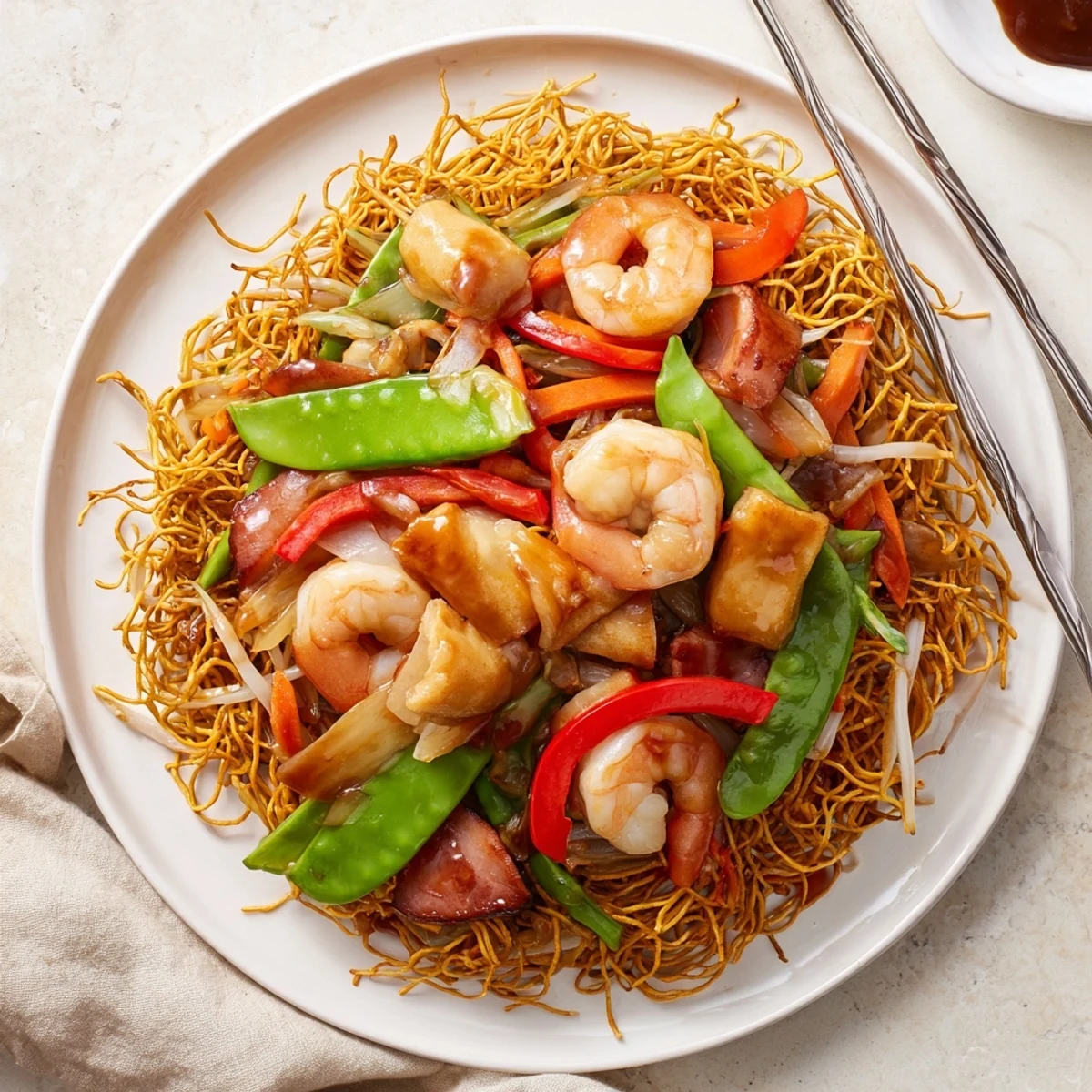
 Master the art of authentic Cantonese chow mein with this classic preparation featuring golden crispy noodles as the foundation for a medley of marinated proteins and fresh vegetables. The dish showcases the signature contrast of textures that makes this stir-fried noodle favorite so beloved, with the crisp base perfectly complemented by tender toppings coated in an aromatic sauce combining soy, oyster sauce, and Shaoxing wine.
The technique involves par-cooking fresh egg noodles before pan-frying them until golden and crunchy, creating a sturdy base that holds up beautifully under the savory topping. The protein components—chicken breast and shrimp—are quickly marinated for maximum flavor, while char siu adds depth and sweetness. Snow peas, bell pepper, julienned carrot, and bean sprouts provide crunch and color.
Perfect for family dinners or casual gatherings, this versatile main dish can be easily adapted for vegetarians using firm tofu. Serve immediately while the noodles retain their signature crisp texture, ensuring every bite delivers that satisfying contrast between the crunchy base and the tender, flavorful toppings.
The steam rising from a street vendors wok in Hong Kong first made me fall in love with these noodles. I spent weeks trying to recreate that perfect contrast between crispy bottom and tender toppings in my tiny apartment kitchen, burning through several batches of noodles before finding my rhythm.
My roommate walked in while I was perfecting the noodle crisping technique and immediately demanded I make it for her birthday dinner that weekend. Now whenever I smell sesame oil hitting a hot wok, I think of that impromptu feast and how something so simple became our go to celebration meal.
Ingredients
- Fresh egg noodles: These create the best crispy texture but thin Chinese wheat noodles work beautifully too
- Chicken breast: Slice it paper thin against the grain for tenderness that melts in your mouth
- Shrimp: Fresh ones plump up gorgeously but frozen thawed shrimp work in a pinch
- Char siu: Store bought is totally fine or substitute with roast pork for that sweet smoky depth
- Bean sprouts: They add that essential crunch that makes every bite interesting
- Snow peas: Leave them whole for bursts of sweetness that cut through the rich sauce
- Light soy sauce: This provides the saltiness without darkening the dish too much
- Oyster sauce: The umami backbone that makes everything taste restaurant quality
- Shaoxing wine: Dry sherry works if you cannot find this Chinese cooking wine
- Sesame oil: A little goes a long way so use it sparingly for that aromatic finish
Instructions
- Marinate the proteins:
- Toss chicken and shrimp with soy sauce, cornstarch, and white pepper. Let them sit for 10 minutes while you prep everything else.
- Prep the noodles:
- Blanch fresh noodles for 1 to 2 minutes then drain them really well. Any water left on them will prevent proper crisping later.
- Create the crispy base:
- Heat oil in your wok over medium high heat, spread noodles evenly, and let them cook undisturbed for 3 to 4 minutes until golden. Flip carefully and crisp the other side then transfer to your serving platter.
- Cook the proteins:
- Stir fry chicken for 1 to 2 minutes until almost cooked through then add shrimp until they turn pink. Toss in char siu, carrot, bell pepper, and snow peas for another 2 to 3 minutes.
- Add the crunch:
- Throw in bean sprouts and spring onions for just 1 minute so they stay snappy and bright.
- Build the sauce:
- Pour in the combined sauce ingredients and bring to a gentle simmer.
- Thicken it up:
- Stir in your cornstarch slurry and watch the sauce turn glossy and coat everything beautifully.
- Bring it together:
- Pour that bubbling topping right over your crispy noodles and serve immediately while the contrast is at its best.
 Save to Pinterest
 This dish transformed a random Tuesday night into something celebratory when I finally nailed the sauce consistency. That first perfect bite where the crunch meets the tender topping made all the failed attempts worth it.
Getting The Noodle Crisp Right
I used to crowd my pan and ended up with soggy noodles until I learned to use my largest skillet or wok. The key is letting them cook undisturbed so a golden crust forms, just like a pancake.
Sauce Secrets
Mix your sauce ingredients before you start cooking because the sauce happens fast once it hits the hot wok. I keep a small bowl of water nearby to adjust the consistency if it thickens too quickly.
Make It Your Way
This recipe welcomes substitutions based on what you have or love. The technique stays the same while the ingredients flex to fit your taste.
- Firm tofu cubes work beautifully as a protein alternative
- Add sliced bok choy or mushrooms for more vegetable variety
- Crushed red pepper flakes bring a nice heat if you like spice
 Save to Pinterest
 Gather your friends around the platter and let everyone dig in family style while the noodles are still crisp. That first satisfying crunch is what turns dinner into a memory.
Recipe FAQs
- → What makes Cantonese chow mein different from other noodle dishes?
-
Cantonese chow mein features a signature contrast of textures—crispy pan-fried noodles topped with tender stir-fried ingredients. The noodles are first par-cooked, then fried until golden and crunchy on both sides, creating a sturdy base that holds up beautifully under the savory sauce and toppings.
- → Can I use dried noodles instead of fresh egg noodles?
-
Yes, dried thin Chinese wheat noodles work well. Cook them according to package directions until al dente, then drain thoroughly and proceed with the pan-frying step. Fresh egg noodles yield the best texture, but dried noodles are a convenient alternative.
- → How do I prevent the noodles from becoming soggy?
-
Ensure noodles are thoroughly drained after blanching. Pan-fry them over medium-high heat undisturbed until crisp before flipping. Serve immediately after adding the topping and sauce—the crispy texture is best enjoyed right away. Don't overcrowd the pan when frying.
- → What proteins work best in this dish?
-
The classic combination includes chicken breast, shrimp, and char siu for variety. You can substitute roast pork, thinly sliced beef, or use firm tofu for a vegetarian version. Marinate quick-cooking proteins in soy sauce and cornstarch for tenderness and flavor.
- → Can I make this dish gluten-free?
-
Use gluten-free rice noodles or certified gluten-free wheat noodles. Substitute tamari for soy sauce, and choose a gluten-free oyster sauce alternative. Double-check all packaged ingredients including char siu, as many contain wheat-based sauces.
- → What vegetables can I add or substitute?
-
Bok choy, Chinese cabbage, mushrooms, bamboo shoots, or baby corn make excellent additions. Adjust cooking times accordingly—denser vegetables need longer stir-frying. Keep the total vegetable quantity balanced with proteins and noodles for the best proportions.