
 Save to Pinterest
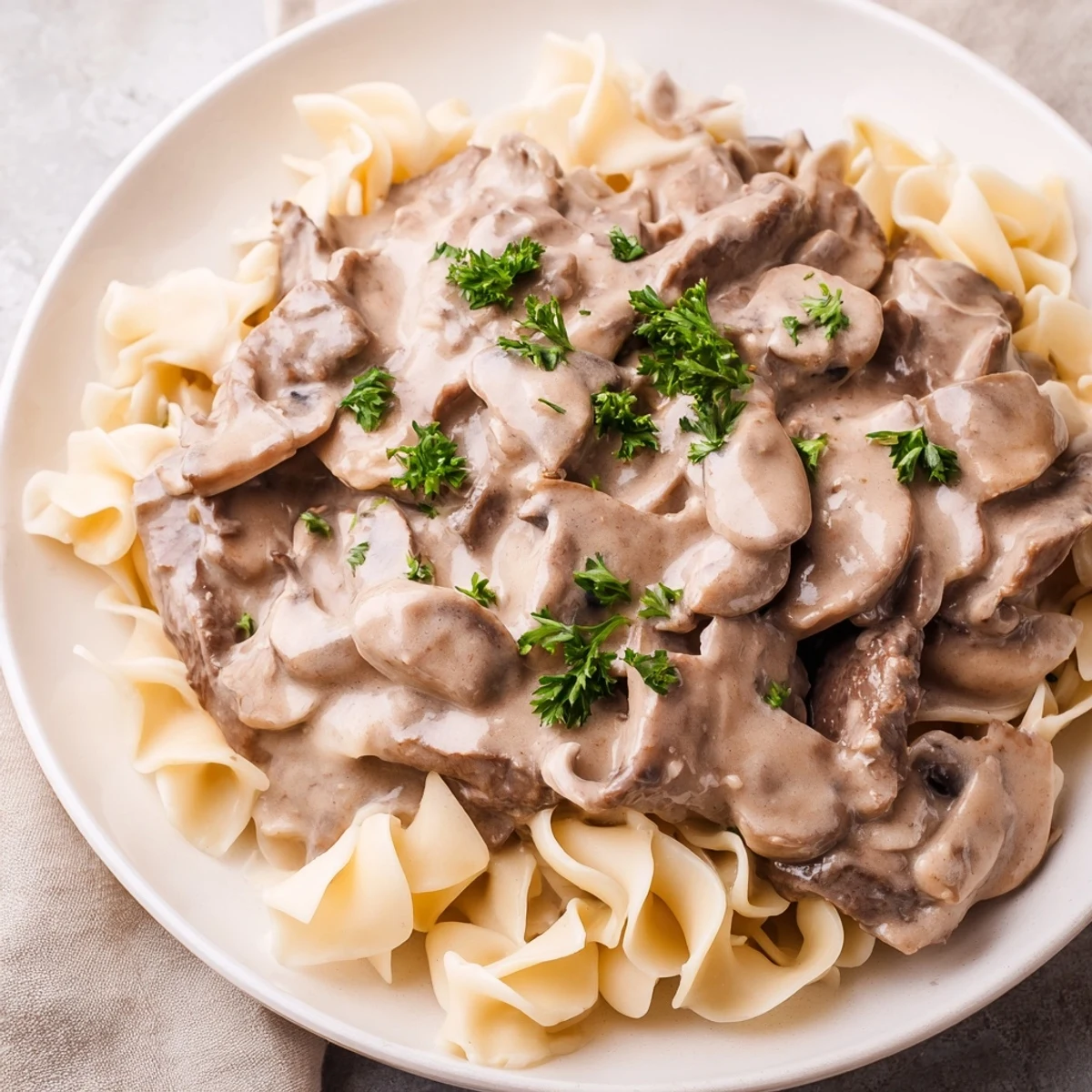
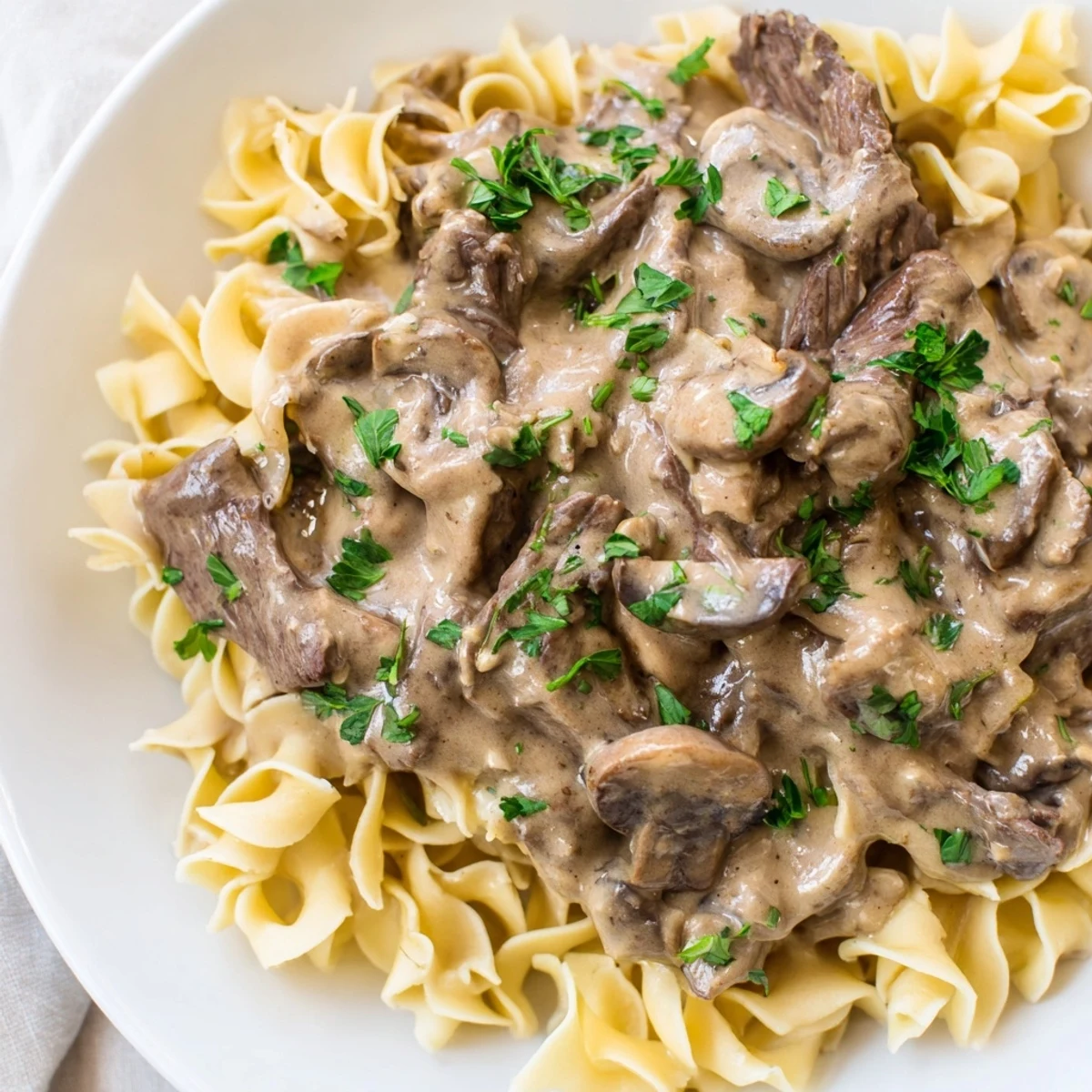
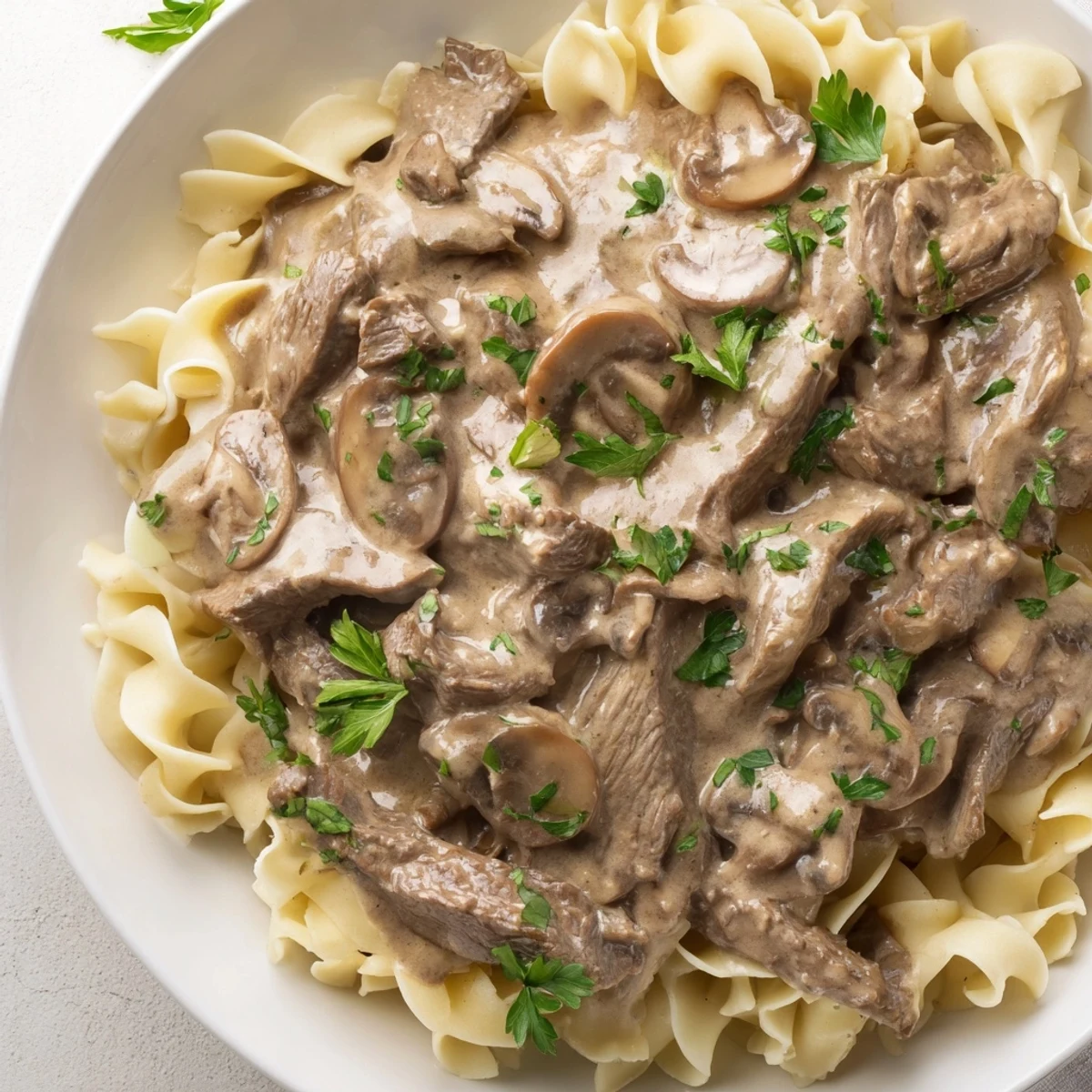
 This dish features tender strips of beef seared to perfection, combined with sautéed mushrooms and onions in a creamy, tangy sauce. The sauce is enriched with sour cream and heavy cream, balanced by mustard and Worcestershire for depth. Served over egg noodles or rice and garnished with fresh parsley, it’s a satisfying meal perfect for those seeking comforting flavors with a rich texture. Cooking involves simple sautéing and simmering steps, allowing the sauce to thicken and coat the meat beautifully.
There's something about a rainy Thursday evening that makes stroganoff feel like the only reasonable dinner choice. I was standing in my kitchen, tired from the day, when I remembered my grandmother's version—how she'd coax those mushrooms into golden submission and let the cream do its magic. That night, I threw together what I had, and the smell alone made everything feel instantly better. Sometimes the simplest dishes carry the most comfort.
I made this for my partner's friends one winter, and someone actually asked for the recipe before dessert—a rare compliment in that group. What struck me was how everyone slowed down to really eat it, instead of just consuming. That's when I realized stroganoff isn't just food; it's a conversation starter and a reason to linger at the table.
Ingredients
- Beef sirloin or rump steak (500 g): Cut thin so it stays tender and cooks fast; thicker cuts get chewy and ruin the whole dish.
- Cremini or button mushrooms (250 g): They absorb flavor beautifully and release their moisture into the sauce, so don't skip the sautéing step.
- Onion (1 medium): Finely chopped so it melts into the background and sweetens the sauce.
- Garlic (2 cloves): Minced fresh, never powdered; it brightens everything without overpowering.
- Heavy cream (200 ml): The backbone of the sauce; don't substitute it with milk or you'll lose that luxurious richness.
- Sour cream (2 tbsp): This adds tang and prevents the sauce from being one-note sweet.
- Vegetable oil (2 tbsp): Gets hot enough to sear without burning, unlike butter alone.
- Unsalted butter (2 tbsp): Adds depth; use real butter, not margarine.
- All-purpose flour (1 tbsp): Thickens the sauce without making it grainy if whisked in smoothly.
- Beef broth (120 ml): Use good quality; cheap broth makes the whole sauce taste flat.
- Dijon mustard (1 tbsp): Sharp and slightly spicy; it's the secret that makes people ask what's in this.
- Worcestershire sauce (1 tbsp): A savory anchor that brings depth and umami to the cream.
- Salt and black pepper: Taste as you go; the sauce is forgiving if you season in layers.
- Egg noodles or rice (300 g): Egg noodles are traditional and catch the sauce better than plain pasta.
- Fresh parsley: A handful chopped just before serving adds brightness and color.
Instructions
- Get your noodles started:
- Put a pot of salted water on to boil and follow the package directions. You want them done just before the stroganoff finishes so everything comes together hot and steaming.
- Sear the beef quickly:
- Heat the oil and butter together in a large skillet over medium-high heat until it shimmers. Working in two batches so you don't crowd the pan, sear the beef strips for just 1–2 minutes per side—they should be browned outside but still pink in the middle because they'll cook again in the sauce.
- Build the base with onions and garlic:
- Lower the heat to medium, add the remaining oil and butter, then sauté the onions for a few minutes until they soften and lose their bite. Add the garlic and cook just until fragrant, about 30 seconds—any longer and it turns bitter.
- Golden the mushrooms:
- Add the sliced mushrooms and let them sit undisturbed for a minute or two, then stir occasionally. You're waiting for them to release their liquid and then reabsorb it, turning golden and concentrated, about 5–6 minutes total. This is where half the flavor happens.
- Make a paste with the flour:
- Sprinkle the flour over the vegetables and stir constantly for exactly one minute. This cooks out the raw flour taste and prevents lumps when you add the liquid.
- Add the liquid and seasonings:
- Pour in the beef broth while scraping the bottom of the pan to release all those browned, flavorful bits. Add the Dijon mustard and Worcestershire sauce, then let it simmer for 2–3 minutes until the sauce thickens slightly and loses its raw taste.
- Finish with cream:
- Lower the heat to low and slowly stir in the heavy cream and sour cream until the sauce is smooth and silky. Return the beef to the pan along with any juices that collected, then simmer gently for 3–4 minutes just until everything is heated through. The heat should be so gentle that the sauce barely bubbles.
- Taste and serve:
- Season with salt and pepper to taste, remembering that salty broth and Worcestershire add seasoning too. Serve immediately over hot noodles or rice with a shower of fresh parsley.
 Save to Pinterest
 I served this to someone who claimed they didn't like stroganoff, and watching them go quiet and just eat was a small victory. There's something about a dish that's both elegant and totally unpretentious—it doesn't ask for much, but it gives everything back.
The Story Behind Stroganoff
Stroganoff has Russian roots and a glamorous history, supposedly named after a 19th-century count, but honestly, it became famous because it's just brilliant—tender beef, earthiness from mushrooms, and a silky sauce that makes everything taste like you've been cooking for hours. What I love about it is that it never feels pretentious; it tastes like someone made it with care, not for show. It's the kind of dish that travels well across cultures and kitchens, and every cook makes it their own.
Timing and Temperature Control
The whole secret to stroganoff is managing heat and time. The beef needs a hard, fast sear to develop flavor, but the cream sauce needs gentle, patient heat or it breaks and splits. Once you return the beef to the pan, think of yourself as a caretaker—you're just keeping everything warm and together, not cooking it harder. If you rush this part, the sauce becomes grainy and the beef toughens up, undoing all your good work.
Variations and Flexibility
Once you nail the basic technique, stroganoff is forgiving and fun to play with. I've used half-and-half on lighter nights, added a splash of white wine or brandy for elegance, and even swapped the beef for chicken or pork when that's what made sense. The core method stays the same—sear your protein, build your aromatics, bloom your flour, add liquid, finish with cream—and almost everything tastes good. The one thing I'd never skip is the sour cream and mustard combination; they're what make it sing instead of just taste creamy.
- Add a splash of brandy or white wine after sautéing the mushrooms for a more sophisticated flavor.
- Substitute half-and-half for heavy cream if you want something lighter and less rich.
- Use gluten-free flour and noodles if you need to, and the dish works just as beautifully.
 Save to Pinterest
 This is the kind of dinner that reminds you why you cook in the first place—simple, honest, and deeply satisfying. Make it when you need comfort, when you're feeding people you care about, or just when a rainy Thursday calls for something warm.
Recipe FAQs
- → Can I use other types of mushrooms?
-
Yes, cremini or button mushrooms work best for their texture and flavor, but you can substitute with shiitake or portobello for a richer taste.
- → How do I prevent the beef from becoming tough?
-
Slice the beef thinly against the grain and sear quickly on high heat to keep it tender and juicy.
- → What’s the best way to thicken the sauce?
-
Sprinkling flour over the sautéed vegetables before adding broth helps create a smooth, slightly thickened sauce.
- → Can I substitute heavy cream with lighter options?
-
Half-and-half can be used for a lighter sauce, but it may be less rich and creamy.
- → Which sides work well with this dish?
-
Egg noodles or rice are classic; choose gluten-free noodles for dietary needs or serve with steamed vegetables for variety.
- → How can I add extra flavor to the sauce?
-
A splash of white wine or brandy after mushrooms sautéing adds depth and complexity to the sauce.